Search This Blog

Monday, November 17, 2014

Teddy Bears

November 14, 1902, President Theodore Roosevelt was on a bear hunting trip with Mississippi Governor Andrew H. Longino. While the other hunters were successful, Roosevelt had not located a bear. In order to help the president out, some of the guides found an old black bear and tied it to a tree and presented it to Roosevelt to shoot. Roosevelt refused, seeing the act as unsportsmanlike. 


Photo: whitehouse.gov

The news of this incident spread around the country and was published as cartoon by political cartoonists Cliffordd Berryman. The cartoon was published on November 16th and inspired Brooklyn businessman Morris Michtom. 

Photo: smithsonianmag.com


Michtom owned a candy store but he also made stuffed animals. Inspired by the cartoon, Michtom designed a stuffed bear and named it "Teddy's Bear" in honor of the President. He sent one to Roosevelt asking permission to use his name with the product. Roosevelt was often called Teddy but actually disliked the nickname. However, he granted Michtom the ability to use it for his stuffed bear. 

Photo: frontierbrigadeband.com
The Teddy Bear became so popular, that Michtom founded his own toy company. In addition, Roosevelt himself used a Teddy Bear on his reelection campaign. Even today, Teddy Bears are still popular, but how many of you knew the origin story?
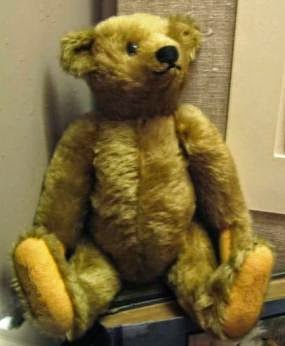

Photo: nps.gov

Friday, November 14, 2014

March to the Sea

150 years ago, General William Tecumseh Sherman and his troops left Atlanta, Georgia on November 15th and began their journey to Savannah. The intent of this 300 mile march was to destroy specific targets in Georgia, as well as everything else. 

Photo: sfmuseum.org

Ulysses S. Grant and Sherman believed that the war would only end if the Confederacy lost its economy as well as its desire for war. Sherman planned to destroy everything in his path in a style similar to scorched earth warfare.

Photo: granthome.com

In order for the plan to work, Sherman and his army could not be tied to traditional supply lines. Instead, he and his men lived off the land by foraging liberally. Sherman was met with little resistance until November 22, when the Battle of Griswoldville took place. 

Photo: civilwartraveler.com

On December 10, Sherman arrived in Savannah but was unable to enter the town due to entrenched men protecting it. In order to take the town, Sherman needed to connect with the Navy and this was completed by the 17th. On that day, Sherman sent a message to the city, demanding surrender. Instead of surrendering, the Confederate soldiers fled and left the town to surrender on its own. Sherman notified President Lincoln via telegram about his Christmas gift of Savannah. 

Photo: slate.com

During the march, African American refugees flocked to Sherman, causing him to issue Special Field Orders No. 15, also known as "40 acres and a mule," since he assigned them land. However, after the war, the land given to the African Americans was confiscated and restored to its former owners. 


Photo: gathkins.net

Monday, November 10, 2014

The Great War

100 years ago, the world was plunged into the first total war. World War I, then known as the Great War, was sparked by the assassination of Arch Duke Ferdinand but it was the alliances that crisscrossed Europe that drove the war onward. On November 11, 1918, Germany agreed to an armistice, and ended the war.

 Photo: nativepakistan.com

Immediately, November 11th became a significant day in history. Around the world, people commemorate the end of the war by observing the 11th day of the 11th month as a holiday. President Woodrow Wilson proclaimed November 11th as Armistice Day in 1919 but it wasn't until 1938 that Congress proclaimed it as an official holiday to be observed every year in honor world. peace.


Photo: globeatwar.com

At the end of World War II, which resulted in far more casualties than World War I, veteran Raymond Weeks proposed that Armistice Day be expanded to include all service men and not just World War I veterans. His idea was approved and eventually, November 11th became Veterans Day, a day to honor all who have served America in all wars and conflicts. The first celebration of Veterans Day took place in his home town of Birmingham, Alabama.


Photo: bluestarsalute.org

While tomorrow is not the 100th anniversary of the end of the war or even the 100th anniversary of the first observance of Armistice Day, it is significant because 100 years ago, World War I was raging on. 100 years ago this week, the First Battle of Ypres was underway: both sides of the war were trying to gain control of northern Belgium near the sea. It resulted in the halting of the western front.


Photo: firstworldwar.com

Friday, November 7, 2014

Sister Suffragets

This past Tuesdays, voters went to their polling place to place their votes in the midterm elections but 97 years ago, a large portion of the population could not vote. However, in New York state, there was an increase in voters: women were allowed to vote in state elections.


Photo: nytimes.com


On November 6, 1917, women in New York gained the right to vote. As historical consultant Louise Bernikow stated: "When New York women won the right to vote in 1917, they changed the national political landscape. The victory was a critical tipping point on the road to a constitutional amendment." Under the leadership of Carrie Lane Chapman Catt, women in New York undertook an ambitious task in 1917: a house-to-house canvass to campaign for women's votes. Their actions resulted in a petition signed by 1 million women stating that they wanted the right to vote. 

Photo: sites.newpaltz.edu
On the night before election day, Catt was quoted as saying "Vote for women suffrage, because it is a part of the struggle toward democracy." Unlike earlier suffragettes Elizabeth Cady Stanton and Susan B. Anthony, Catt did not put the cause of women suffrage aside because of the war. Instead, she linked what the men were fighting for with what the women were fighting for at home. 

 Photo: nps.gov

November 6, 1917, New York became one of the first states to allow women to vote. This continued a trend in New York history: women had been fighting for women's rights in the state since 1837, when a delegation against female slavery met in New York City. New York is also known for the Seneca Falls meeting in 1848, which was a meeting for women's rights. Three years after New York women gained the right to vote, women across the country were given the right to vote by the 19th Amendment in 1920. 

Photo: archives.gov
 

Monday, November 3, 2014

Don't Panic

In 1897, H.G. Wells published his short story The War of the Worlds. It is considered to be the first narrative of a conflict between humans and aliens and was very popular at the time of publication all the way up until today. In fact, in 1938, it was an extremely influential radio broadcast. 


Photo: biography.com

Actor Orson Welles worked with the Columbia Broadcasting System to put on a radio drama of The War of the Worlds. Welles and the Mercury Theatre on Air collaborated to update the 40 year old short story and make it sound plausible. 


Photo: war-ofthe-worlds.co.uk

Despite an intro that stated it was a dramatization of the story, panic ensued because many listeners missed the intro. Plus, it was performed to sound very much like a real news broadcast interrupting a program of music. As RadioLab hosts pointed out, this style had become commonplace due to the rise of the Nazi party in Germany.


Photo: people.ku.edu

At the end of the broadcast, Welles came on the air to inform listeners that it was a Halloween trick, but the story of a Martian invasion was picked up by newspapers and the hysteria continued. People made inquiries into where they should go to be safe from a Martian invasion or, rather, a German invasion. Some listeners believed that the Germans had attacked New Jersey and New York and that the radio host was simply confused. 


Photo: authorama.com

The truth eventually came out and the nation returned to normal. However, the story has been performed since the original broadcast and it caused panic again, especially in Quito, Ecuador. Happy Halloween!


Photo: telegraph.co.uk


Lonesome No More

On November 1, 1971 the last Pinta Island tortoise was discovered. Prior to this, it was believed that these tortoises had been hunted to extinction by pirates in the 1800s. Lonesome George, the last tortoise, was known as the rarest animal on the planet and was the face of conservation for the Galápagos Islands. George died on June 24, 2012 around the age of 100. 

Photo: telegraph.co.uk

When George was discovered, he was removed from the island so that he could be protected. Efforts to have him mate so that his kind would not go extinct all ended in failure and his death is one of the few instances in which scientists know the exact time of extinction. While mating efforts failed, there is a possible opportunity for his sub-species to continue: when Pinta Island tortoises were being hunted, some of them were also taken to different islands where they mated and created hybrid tortoises.

Photo: animalcorner.co.uk

Today, Lonesome George is on display at the American Museum of Natural History in New York City. He is on loan and will eventually return to the Galápagos Islands, but for now he is a reminder to visitors that species do not last forever and conservation efforts are necessary to halt the extinction of rare animals and plants. 

Photo: Hilary Grabowska

Monday, October 27, 2014

Rapid Transit

New York City is unique, especially in how it has been developed. Due to the Hudson River, the East River and the New York Harbor, the city had to expand north. The business district developed at the southern end of the island while residential areas were developed on the northern end. The difficulty in this became apparent with the question, How were the businessmen to get from their uptown homes to their work downtown?

Photo: nycurbed.com
 
Before the Subway system, New Yorkers traveled via horse cars, cable cars and elevated trains. An underground system was determined to be a preferable mode of transportation to reduce the number of people traveling on the streets. 

Photo: tenement.org 
 
October 27, 1904, the New York City Subway system opened and serviced about 100,000 people on its first day.  The Subway was preferable to elevated trains and cable cars because it was faster and was not subject to weather delays. 

Photo: constructioncompany.com

Almost as soon as the Subway opened, new lines and expansions of existing lines were proposed. Some ideas included competing with the current subway system, or being able to travel from either end of the island on one fare, as well as a loop system to New Jersey. 

Photo: thetransportpolic.com

When the subway system was developed it was built by two different companies, the Interborough Rapid Transit Company and the Brooklyn Rapid Transit Company. In 1940 these companies were combined under the city's Board of Transportation. While it is all one subway system, there are complexities and they are due to the original division between the companies: the IRT company numbered its lines while the BRT company lettered its lines.

Photo: dailymail.co.uk

Today, the New York City Subway is one of the largest underground rapid transit systems in the world with over 400 stations and 34 lines, and it is one of the world's oldest public transportation systems. Without it, a lot of New Yorkers, commuters and tourists would have a difficult time making their way around the city.

Photo: Hilary Grabowska